Published November 12, 2026

If you need a shorter LED channel, a black finish, or mounting holes at specific positions, an existing aluminum extrusion die may suit your project. If you need a wider LED strip mounting surface, a different diffuser groove, or a narrower mounting flange, the supplier needs to review the cross-section before quoting tooling.
Which changes can use an existing extrusion die?
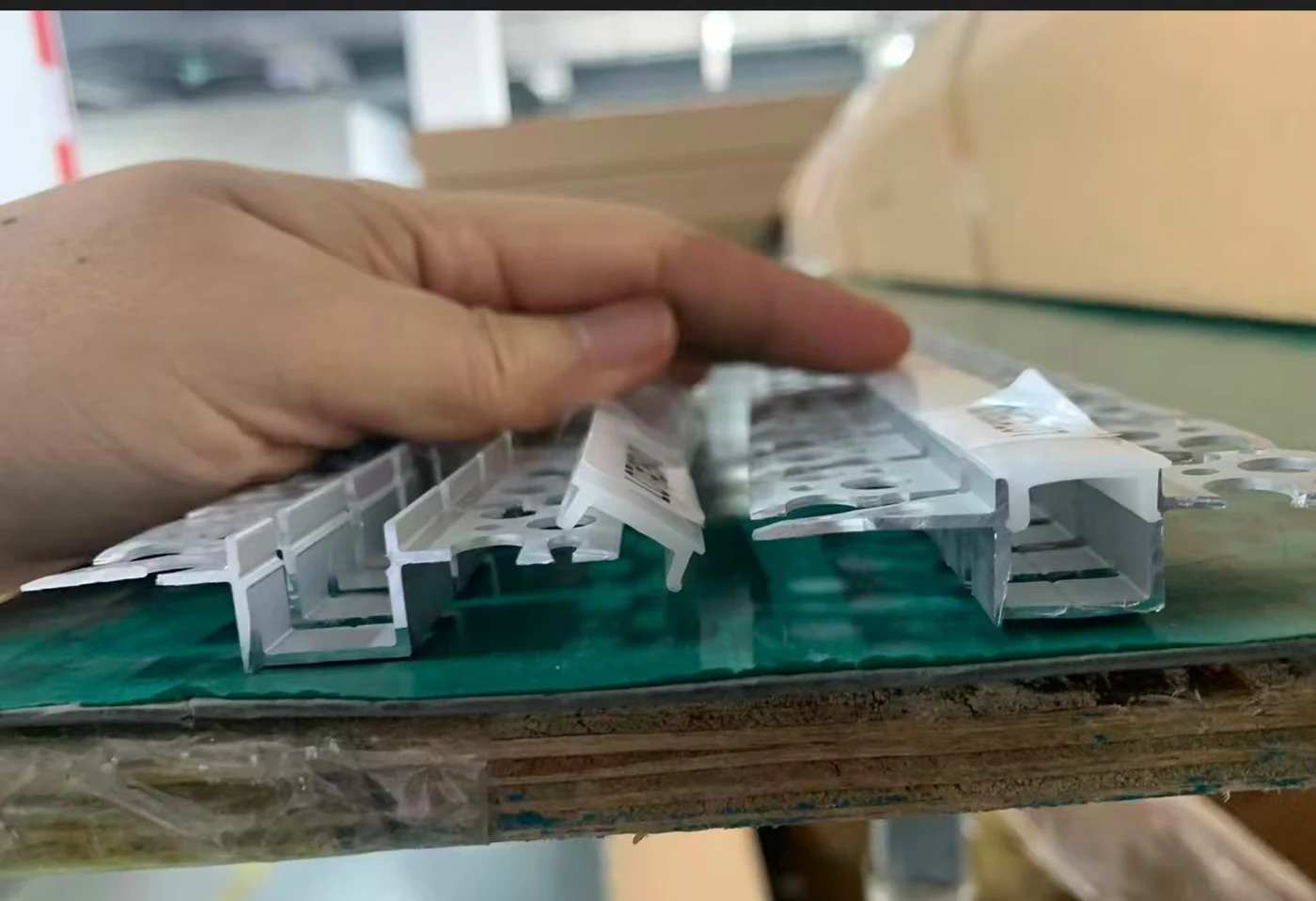
The die forms the cross-section that runs along the length of the aluminum profile. If the section stays the same, many order requirements can be handled by cutting, finishing, or machining the existing extrusion.
| Requested change | What the supplier should review |
|---|---|
| Different cut length | Cut length, tolerance, and packing |
| Silver to black anodizing | Finish requirements and color sample |
| Mounting holes at specified positions | Hole diameter, position, and machining tolerance |
| Clear to opal diffuser | Availability of a cover with the same fitting geometry |
| Wider LED strip mounting surface | Existing cross-sections that meet the requirement, or new tooling |
| Different aluminum diffuser groove or mounting flange | Revised cross-section and fit with the cover, end caps, and clips |
Using an existing die can still require a separate machining setup, a different cover, or a production run for your chosen finish. Ask the supplier to identify these items in the quotation.
Check the cross-section before ordering a new die
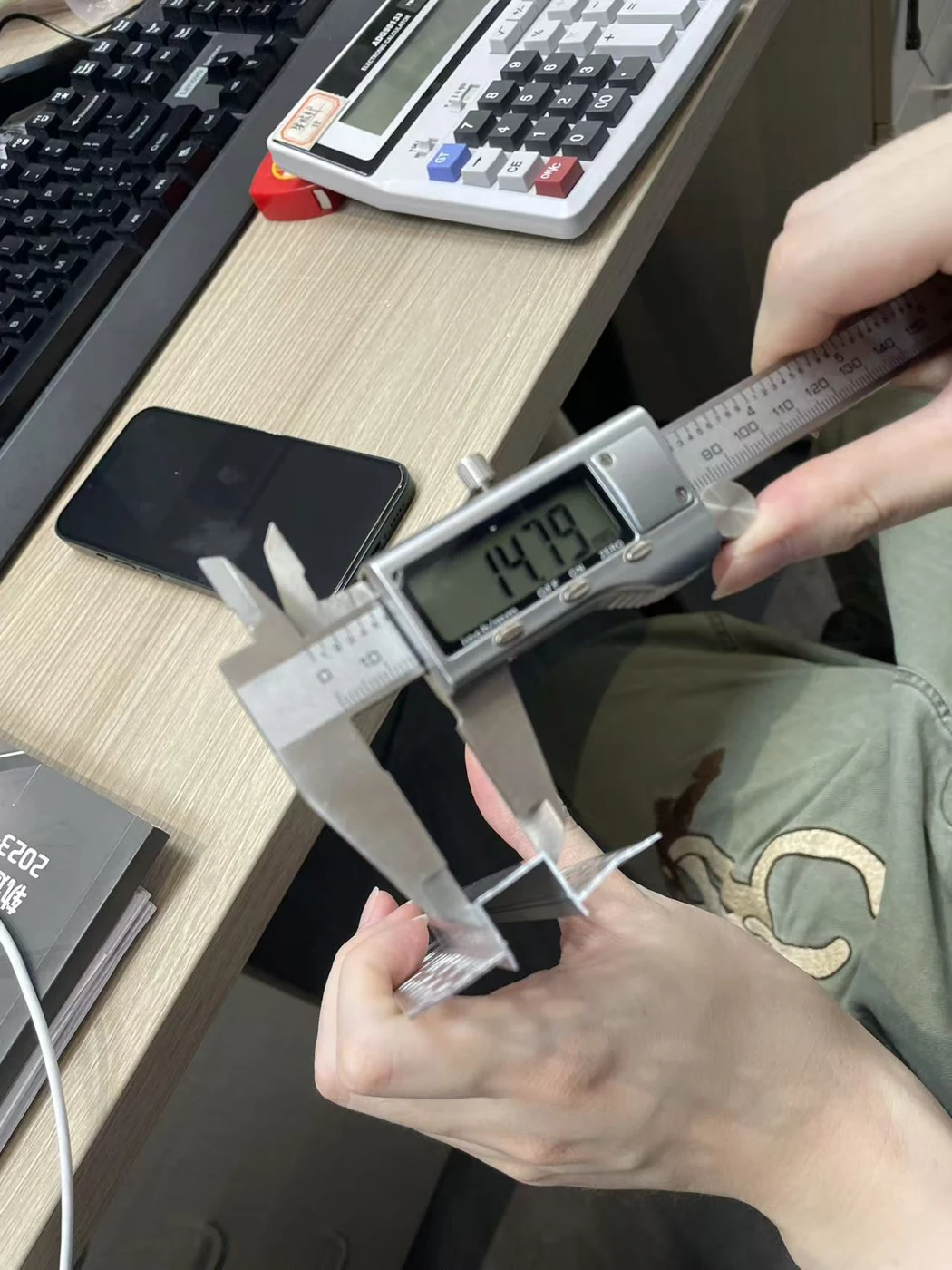
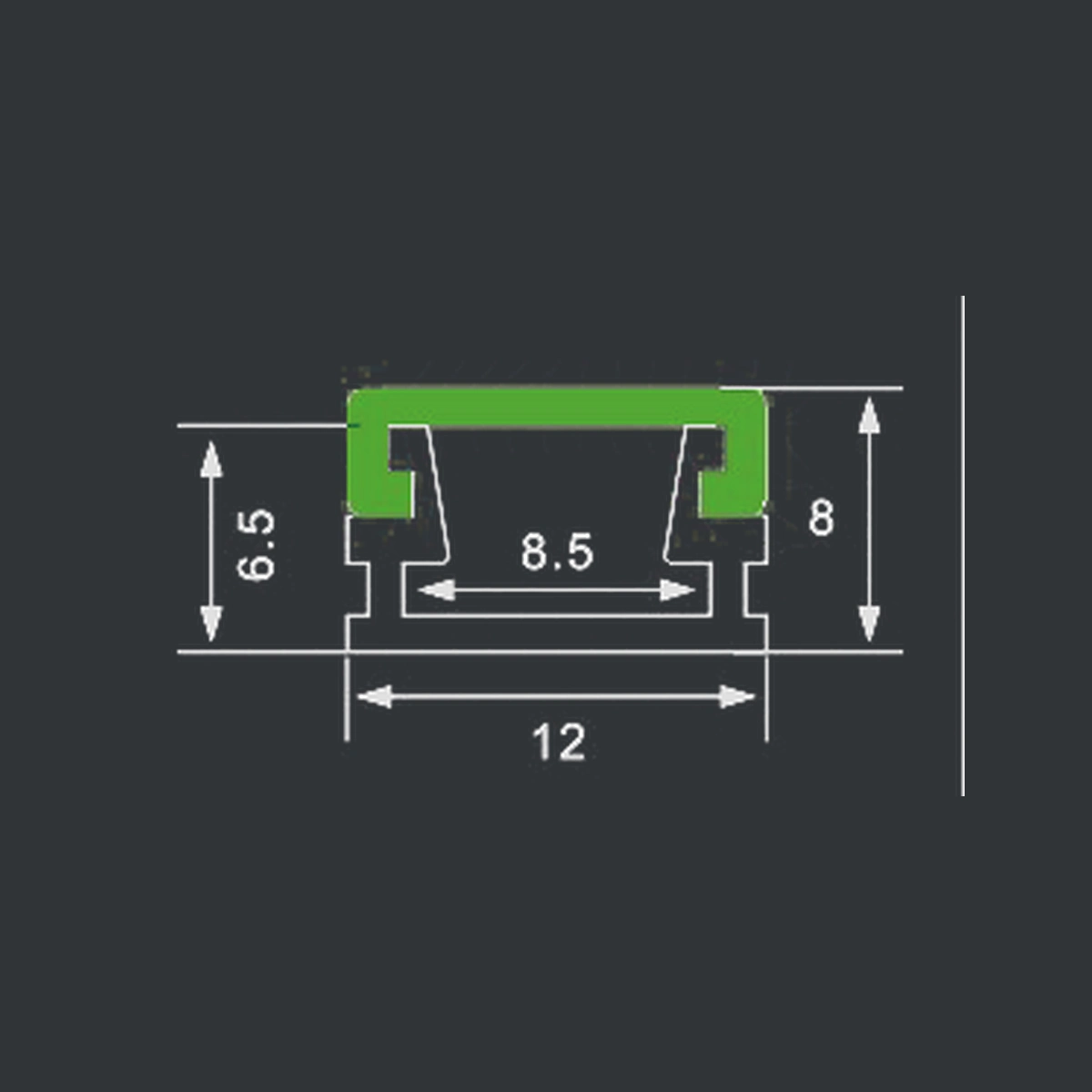 SDXT-268 · Surface mount
8.5 mm internal width. Evaluate LED strips up to 8 mm wide.
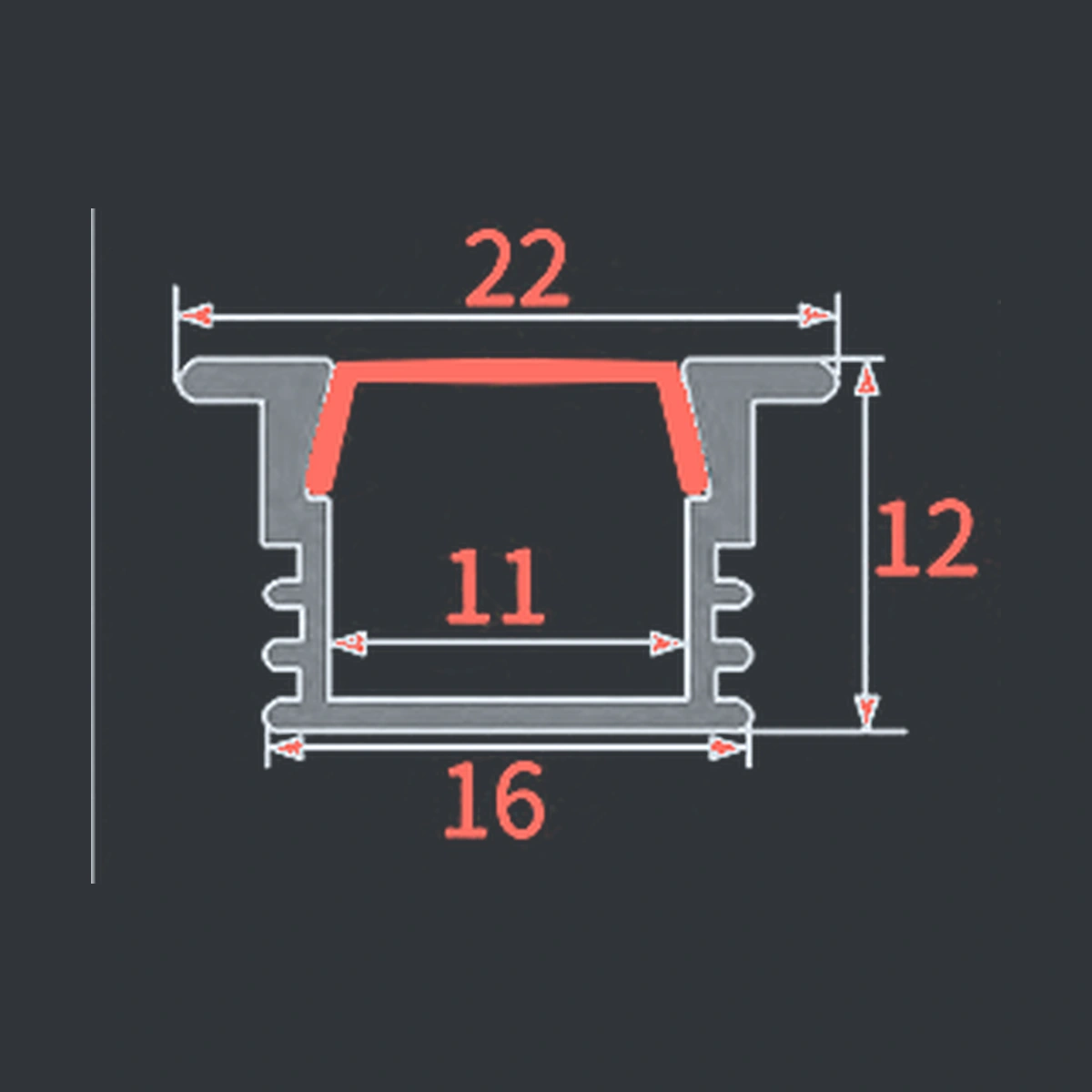 GD-015 · Recessed
11 mm internal width. Evaluate LED strips up to 10 mm wide.
Compare similar mounting types as well. Ultra LEDs lists an 8 mm maximum strip width in the Product Data table for its surface-mount 1207 and 12 mm for its surface-mount CHAN-178. Those limits are specific to the named models. Check the supplier’s stated maximum strip width separately from the internal width shown in the drawing.
Suppose your fixture needs a wider LED strip. Confirm the strip width and the connector dimensions if it sits inside the channel. Then check the usable flat mounting width. The LED channel size guide shows which dimensions to measure.
Ask your supplier to check existing sections against the strip width, diffuser fit, and installation space. If an existing section fits, quote it with your cut length and finish. If no existing section fits, mark the required change on the drawing so the supplier can evaluate a new die and check the mating parts together.
What to send for a tooling quotation

- Cross-section drawing or sample with a drawing revision or reference model.
- Critical dimensions such as overall width and height, usable mounting width, and any groove or flange that must fit another part.
- Mating components including the diffuser, end caps, clips, and any LED strip connector that needs clearance.
- Order details including cut length, finish, initial quantity, and expected repeat orders.
Ask the supplier to show any tooling charge separately from the profile price and identify what the approval sample includes. Before approving production, test the sample with the actual strip, diffuser, and mounting hardware.
Send Union Opto the cross-section and mark the dimensions you want to change. We can review whether an existing section suits your project or whether it needs new tooling.
Explore custom LED aluminum profiles · Request a tooling review and quote