Custom LED Aluminum Profile Solutions for Lighting Manufacturers
What Can Be Customized in an LED Aluminum Profile ?
A custom LED aluminum profile is more than an aluminum housing. Different lighting projects may require different covers, housing finishes, lighting directions and profile dimensions.
At UNION OPTO, we help customers select or customize LED aluminum profiles according to their product designs, installation conditions and lighting requirements.
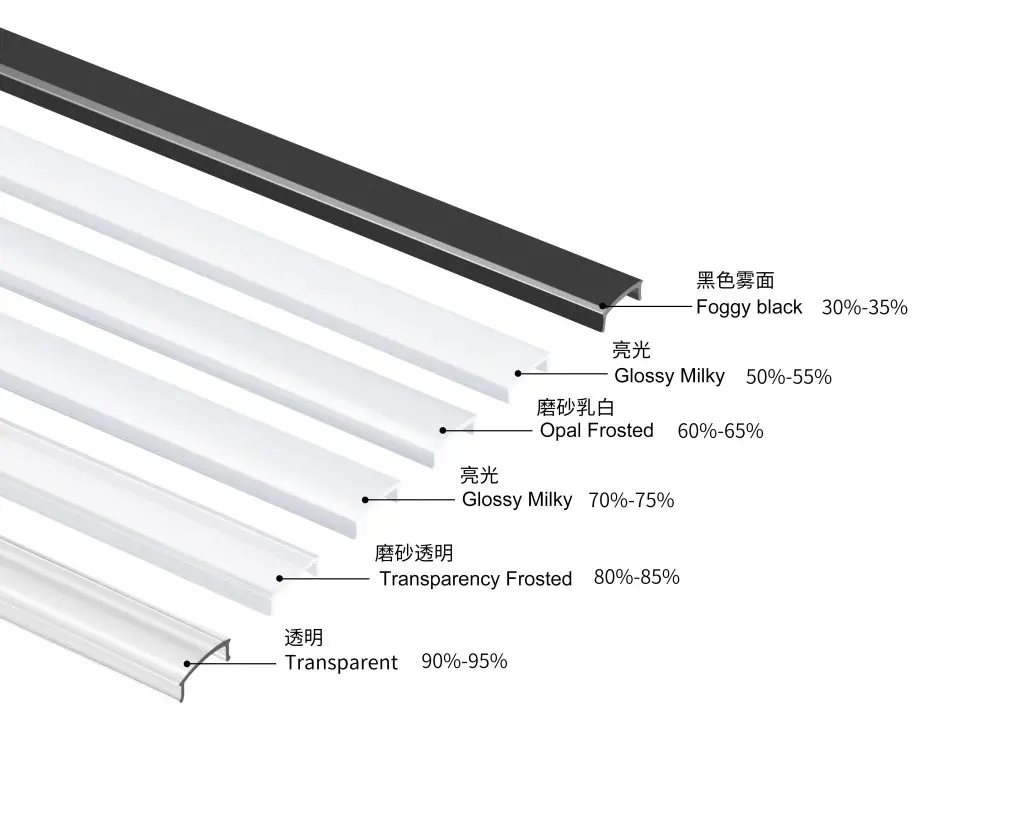
1. PC and Silicone Covers
Choose different cover options to match your lighting effect and product design.
Opal frosted PC covers
Transparent PC covers
Glossy PC covers
Foggy black PC covers
Flexible silicone covers
Seamless silicone covers
Extra-long silicone covers
2. Aluminum Housing Colors
Common finishes include silver, black and white. Other colors, such as gold, red, blue and customized colors, can be discussed according to your project requirements.
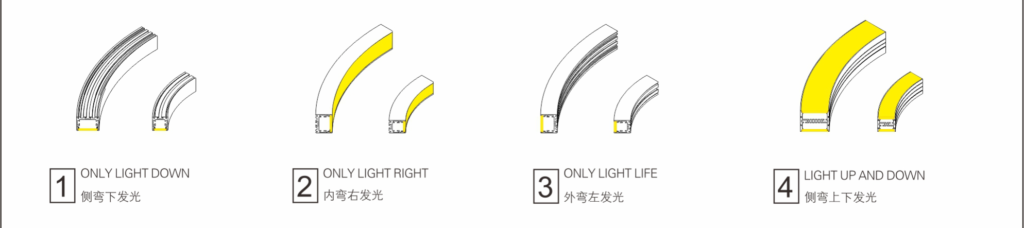
3. Lighting Directions
Depending on the profile structure, lighting can be designed for different directions, including downward, upward and side lighting.
4. Custom Profile Dimensions
Customize the profile width, height, cross-sectional shape and length according to your installation space and luminaire design.
Send us your drawings or samples, and we can review your requirements.
How to Choose the Right PC Cover for Your LED Aluminum Profile
The PC cover affects light transmission, light diffusion, visual comfort and the final appearance of an LED linear light.
In many applications, a standard PC cover can provide sufficient brightness. However, different projects may require different levels of transparency, glare control or decorative effects.
Below are four common PC cover options to help you choose the right solution for your lighting application.
1. Opal Frosted PC Cover
Reference light transmission: 60–65%
An opal frosted PC cover diffuses light and helps create a smooth, continuous lighting effect. It is a common choice for general LED linear lighting where uniform illumination and reduced visibility of individual LED points are important.
Typical applications include offices, cabinets, wardrobes, commercial interiors and general indoor lighting.
2. Foggy Black PC Cover
Reference light transmission: 30–35%
A foggy black PC cover provides a darker appearance when the light is switched off and a lower light output when illuminated.
It can be used for decorative or auxiliary lighting, corridors, stairways and other areas where a subtle lighting effect is preferred. It may also be suitable for sections of a linear luminaire that require a dark or non-illuminated appearance, depending on the product design.
3. Transparent PC Cover
Reference light transmission: 80–95%, depending on the material and specification
A transparent PC cover allows more light to pass through than most diffusing covers. It can be suitable for luminaires that prioritize light output and optical efficiency.
However, a transparent cover alone does not guarantee glare control or uniform illumination. For applications requiring both high light output and visual comfort, an optical lens or other suitable light-control structure may be needed.
4. Glossy PC Cover
Reference light transmission: approximately 50–75%, depending on the specification
A glossy PC cover provides a smoother, more transparent-looking finish than an opal frosted cover. It may be suitable for applications that require a balance between light output, appearance and light diffusion.
The actual lighting effect depends on the cover material, surface treatment, LED spacing and optical design.
How to Select the Right Cover
The figures above are reference values, not universal specifications. Actual light transmission should be confirmed with the cover supplier or measured for the selected material and thickness.
When choosing a PC cover, consider the required brightness, glare control, light uniformity, appearance and installation environment. We can help you review the options for your custom LED aluminum profile project.
Custom LED Aluminum Profile Colors and Surface Finishes
The color and surface finish of an LED aluminum profile affect the appearance of the luminaire, its visual style and the overall project cost.
Standard Colors: Silver, Black and White
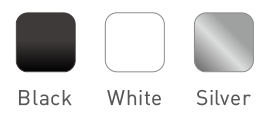
Silver, black and white are common choices for LED aluminum profiles.
Silver: A common choice for aluminum profiles with an anodized finish.
Black: Often selected for modern lighting designs, dark ceilings and architectural applications.
White: Suitable for light-colored ceilings, walls and interior environments.
These standard finishes are widely used in lighting products. Depending on the profile and production schedule, they may offer more economical costs and shorter lead times than customized finishes.
Customized Colors for Special Designs
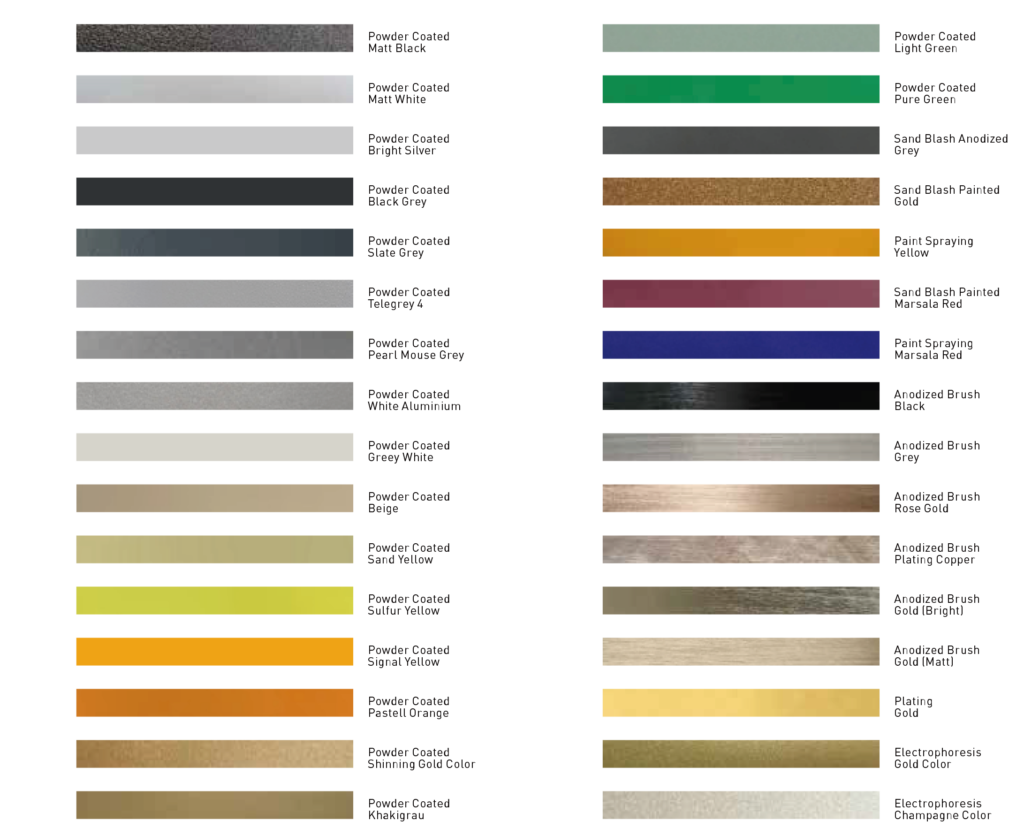
Gold, yellow, red, blue, purple and other customized colors can help create a distinctive appearance for decorative lighting, retail displays, branded interiors and architectural projects.
Custom colors require confirmation of the finish type, color standard, sample and production conditions. For more accurate color communication, we recommend specifying a Pantone color reference or another agreed color standard, such as a RAL code where applicable.
Please note that the final appearance may vary depending on the aluminum alloy, surface preparation, finishing process and lighting conditions.
What About E6EV1 Anodized Finishes?
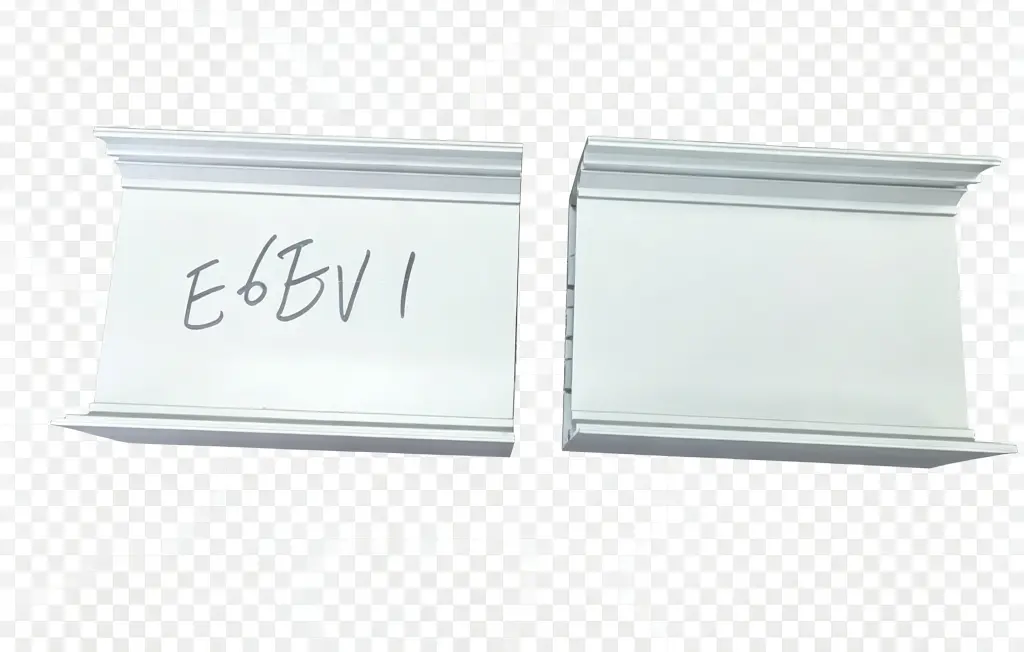
Anodizing is a surface treatment that forms an oxide layer on aluminum. It can provide a distinctive metallic appearance and, when properly specified and processed, good surface durability.
However, anodized finishes have process limitations. The final color and appearance may be affected by the alloy, extrusion surface, pretreatment and anodizing conditions. Marks or variations may also be visible, and some surface defects cannot simply be removed by wiping.
Special anodized finishes may require more careful process control, cost more than standard finishes and need suitable protective packaging during transportation.
For lighting projects, the best finish depends on the required appearance, durability, budget and production quantity. We recommend confirming the finish and an acceptable sample before mass production.
Why Do You Need a Custom LED Aluminum Profile Size?
UNION OPTO offers a range of more than 1,000 LED aluminum profile designs to meet different lighting and installation requirements. Many standard profiles are available from stock, helping customers reduce tooling costs and shorten delivery times.
However, a standard profile cannot meet every project requirement. Custom dimensions or a new extrusion design may be necessary when the installation space, luminaire structure or lighting performance requires a specific solution.
1. Limited Installation Space
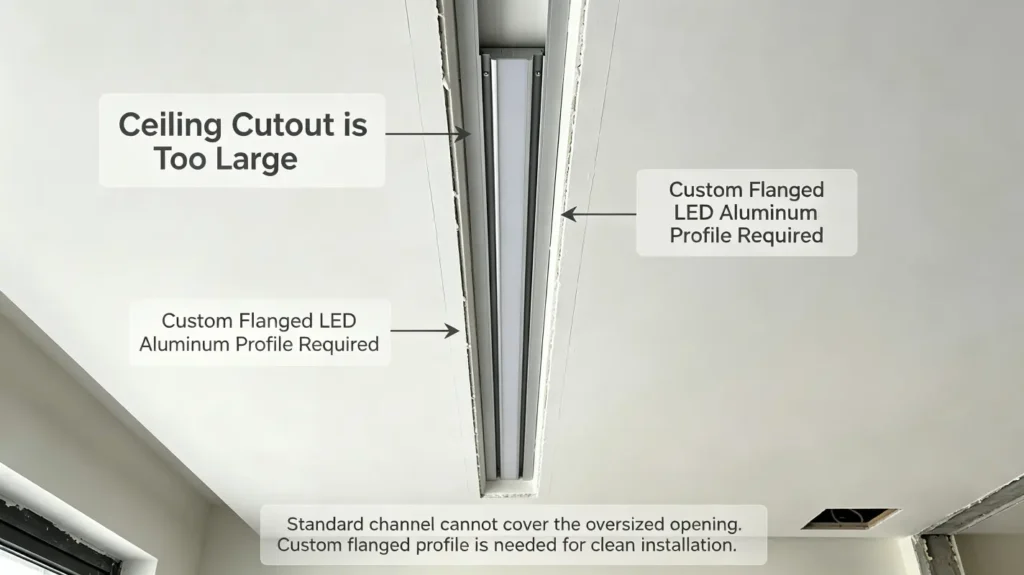
– Ceiling Cutout is Too Large
– Custom Flanged LED Aluminum Profile Required
– Oversized opening needs a flanged profile to cover the gap and ensure clean installation.
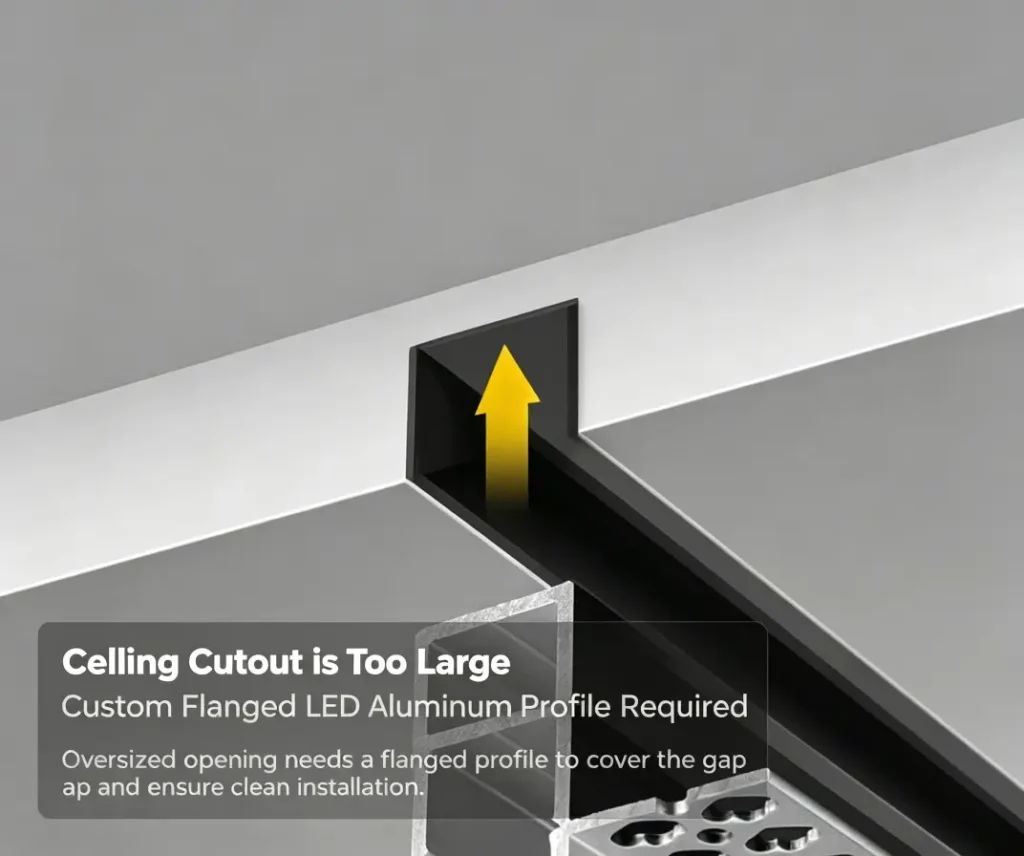
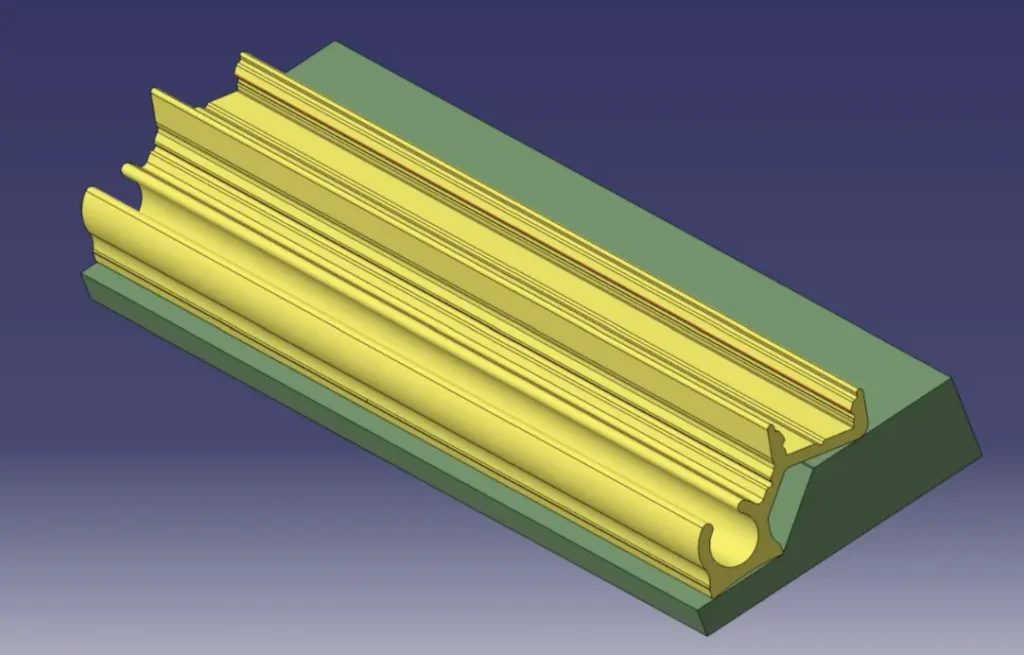
Some projects have strict dimensional requirements. For example, an LED aluminum channel must fit into an existing groove, U-shaped slot, cabinet structure or ceiling detail.
If the dimensions of standard profiles do not match the installation space, a customized profile may be required.
2. Special Structural Requirements
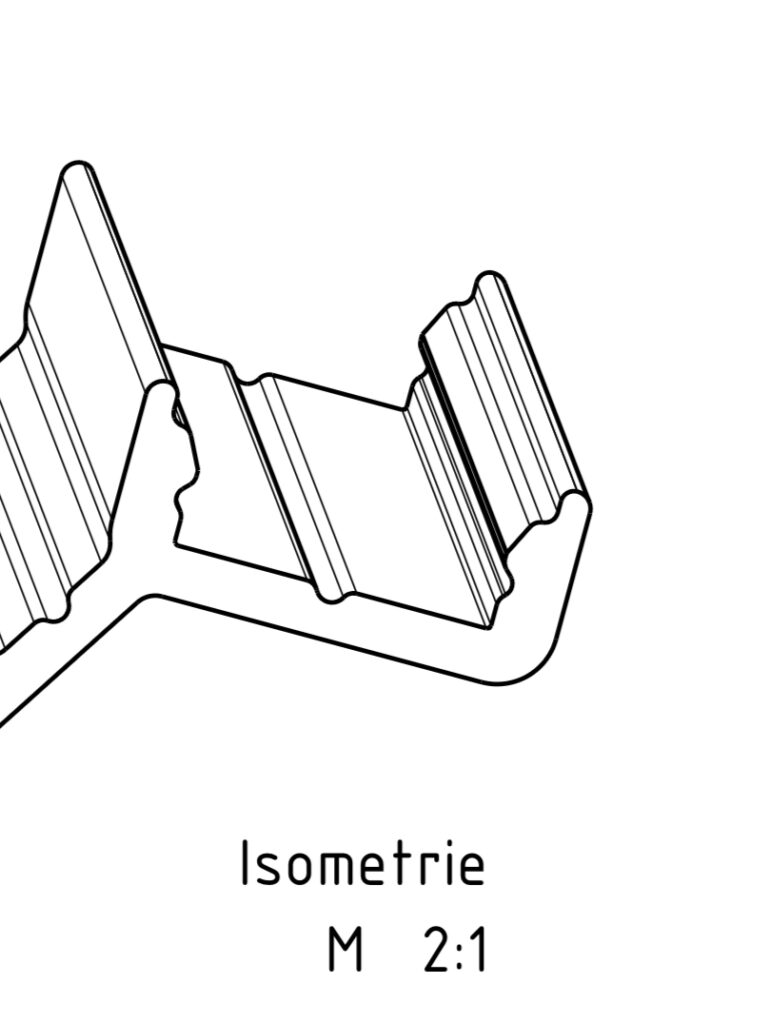
Some luminaires need a specific cross-sectional shape, mounting structure or installation method. In these cases, a custom extrusion die may be needed to produce the required profile geometry.
3. Long Architectural Lighting Lines
Building façades and architectural lighting projects may require long, continuous lighting lines with minimal visible joints.
The required profile length, transportation limits, installation conditions and connection design should be considered together. A custom extrusion or cutting plan may help meet the project’s requirements.
4. Waterproofing and Sealing Requirements
Some lighting products need sealing grooves, gasket positions or special structures for waterproofing.
If a standard profile cannot accommodate the required sealing components, its cross-sectional design may need to be modified.
The final waterproof performance depends on the complete luminaire design, including joints, end caps, gaskets, wiring entries and assembly quality—not only the aluminum profile.
5. Optical and Mechanical Optimization
The aluminum housing may also need to be customized to accommodate a specific LED board, lens, diffuser, mounting component or wiring layout.
The profile structure can affect the space available for optical components, heat dissipation and installation. Customization should therefore consider the entire luminaire rather than the aluminum housing alone.
Standard Profile or Custom Extrusion?
If an existing profile meets your requirements, using a standard design can help reduce tooling costs and simplify purchasing.
If the dimensions, installation structure or product performance cannot be achieved with an existing design, a custom extrusion may be worth considering.
Share your drawings, dimensions and estimated order quantity with us so we can review the available options.
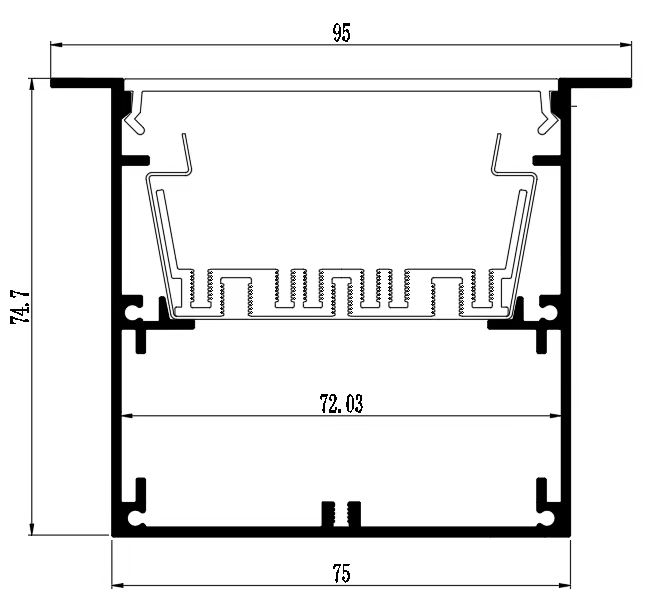
common modular
or
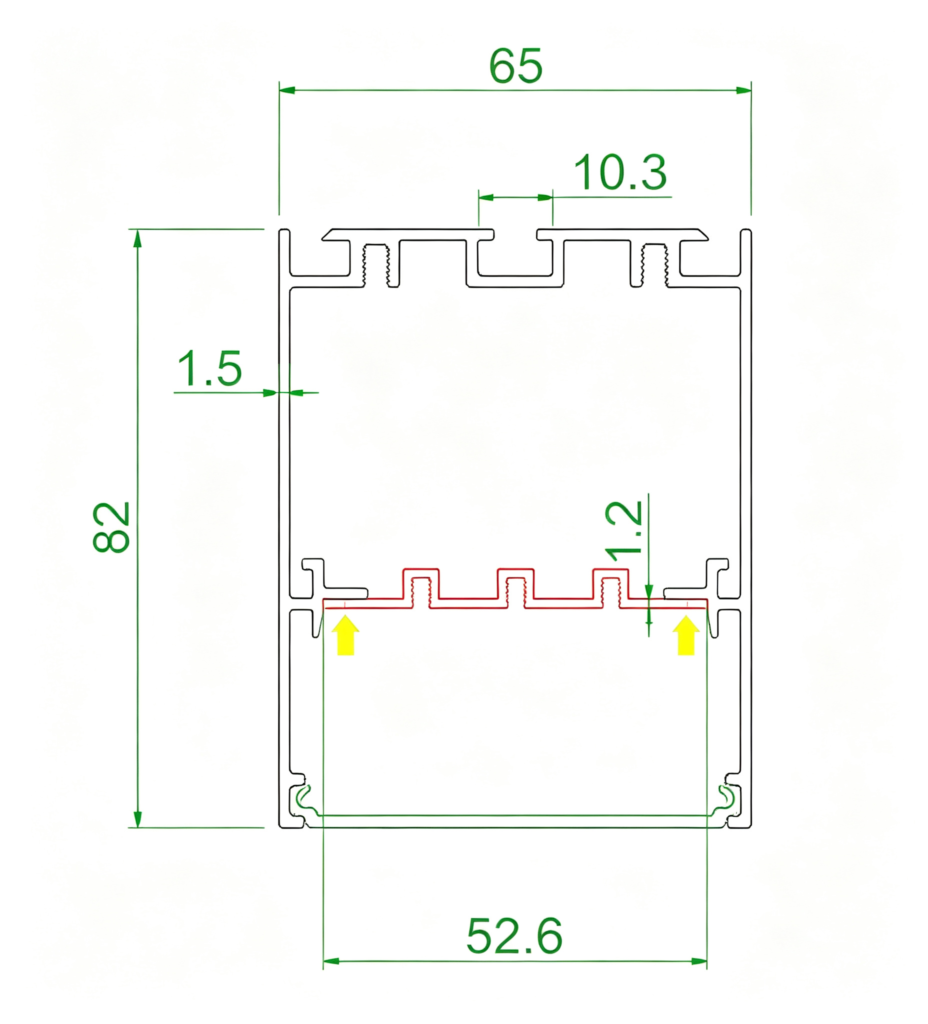
custom modular
Common Mistakes to Avoid When Customizing LED Aluminum Profiles
A custom LED aluminum profile must do more than look good. It also needs to support heat dissipation, mechanical stability, installation and long-term product performance.
Before placing a custom order, consider the following points.
1. Do Not Choose Profile Thickness Based on Price Alone
The aluminum profile acts as part of the luminaire’s heat-dissipation structure. Its performance depends on wall thickness, cross-sectional geometry, material, contact with the LED board, LED power and operating conditions.
An excessively thin or poorly designed profile may deform more easily or provide insufficient thermal performance for a particular luminaire.
Do not assume that a specific wall thickness is suitable for every application. Evaluate the complete design and verify thermal performance under the intended operating conditions.
For long-term reliability, consider temperature testing, mechanical strength and the operating environment before confirming the final profile design.
2. Consider Length Tolerances and Thermal Expansion
Extruded profiles and assembled luminaires have dimensional tolerances. Aluminum also expands and contracts as temperature changes.
For long lighting lines, consider profile cutting tolerances, installation gaps, connection details and the expansion requirements of the complete assembly.
The required clearance depends on the profile length, temperature range, mounting method and project specifications.
3. Plan Support for Long Profiles
Long or recessed aluminum profiles may bend or become misaligned if their geometry and mounting points are not suitable for the installation.
Before production, confirm the profile length, support spacing and mounting method. Depending on the design, additional clips, connection plates or fixing screws may be required.
4. Control Color Consistency Between Production Batches
For large orders or repeat purchases, confirm the surface finish, color reference and acceptable color variation before mass production.
Where color consistency is important, discuss sample approval, batch control, packaging and inspection procedures with the supplier.
5. Check Surface Durability and Corrosion Requirements
The appropriate surface treatment depends on the application environment.
For projects exposed to moisture, salt or other corrosive conditions, specify the required corrosion resistance and an appropriate test method. Salt spray testing may be relevant, but the test duration and acceptance criteria should match the actual project requirements.
Do not assume that a finish meets an international standard unless the applicable standard and supporting test evidence have been confirmed.
6. Plan Wiring, Connections and Installation
Before finalizing the extrusion design, check whether it provides enough space for wiring, LED boards, drivers or other components where applicable.
For multi-section luminaires, consider connection plates, mounting clips, screw positions, cable routing and the alignment of adjoining profiles.
For waterproof products, also review gasket grooves, end caps, sealing interfaces and cable entries.
A successful custom profile starts with the complete luminaire design. Confirming these details before tooling and mass production can help reduce design changes, assembly problems and avoidable costs.
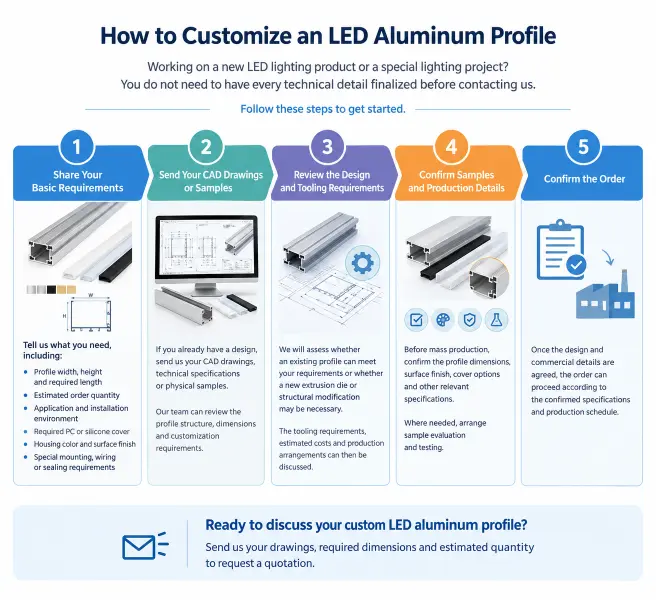
How to Customize an LED Aluminum Profile
Working on a new LED lighting product or a special lighting project? You do not need to have every technical detail finalized before contacting us.
Follow these steps to get started.
Step 1: Share Your Basic Requirements
Tell us what you need, including:
Profile width, height and required length
Estimated order quantity
Application and installation environment
Required PC or silicone cover
Housing color and surface finish
Special mounting, wiring or sealing requirements
Step 2: Send Your CAD Drawings or Samples
If you already have a design, send us your CAD drawings, technical specifications or physical samples.
Our team can review the profile structure, dimensions and customization requirements.
Step 3: Review the Design and Tooling Requirements
We will assess whether an existing profile can meet your requirements or whether a new extrusion die or structural modification may be necessary.
The tooling requirements, estimated costs and production arrangements can then be discussed.
Step 4: Confirm Samples and Production Details
Before mass production, confirm the profile dimensions, surface finish, cover options and other relevant specifications. Where needed, arrange sample evaluation and testing.
Step 5: Confirm the Order
Once the design and commercial details are agreed, the order can proceed according to the confirmed specifications and production schedule.
Ready to discuss your custom LED aluminum profile? Send us your drawings, required dimensions and estimated quantity to request a quotation.
Custom LED Aluminum Profile Case Study: A Government Building in Germany
Project Background
For a government building project in Germany, the lighting design required custom linear luminaires with specific dimensions, uniform illumination and a clean architectural appearance.
The standard aluminum profiles available at the time could not fully meet the project’s dimensional and structural requirements, so a customized profile solution was developed.
Custom Aluminum Profile Design
A new extrusion die was used to produce the required aluminum profile dimensions and height.
The design also needed to accommodate the LED boards, optical components, connections and different functional sections of the luminaire.
High Brightness, Uniform Light and Glare Control
The project required high light output, uniform illumination, reduced glare and flicker-free operation.
Lenses were fitted over the LEDs to help control light distribution and improve the uniformity of the lighting effect. The final optical performance depends on the lens design, LED layout and complete luminaire configuration.
Different Lengths and Electrical Configurations
The linear luminaires were assembled in different lengths and sections. The design needed to accommodate multiple power connections and two LED board power configurations.
DALI-compatible drivers were used for the lighting control requirements. The driver and luminaire configuration also needed to support the project’s flicker-performance requirements.
Custom Cover Options for Different Functions
Different sections required different visual and lighting effects.
Black PC covers: Used for designated non-illuminated or visually dark sections, according to the project design.
Silver-colored components: Used in sections requiring the specified aluminum appearance.
Sensor integration: Selected sections required openings and mounting provisions for sensors.
Project Outcome
The customized aluminum profile provided the required dimensions and structural space for the luminaire design, optical components, electrical connections and sensor integration.
This project demonstrates how custom LED aluminum profiles can support lighting products with special dimensional, optical and installation requirements.
If your project involves non-standard profile dimensions, multiple lighting sections, sensor integration or special optical requirements, share your drawings with us to discuss a suitable solution.