Importing LED Aluminum Profiles into the EU: A Buyer’s Document Checklist
Datasheets, material evidence and customs documents for B2B buyers.
Before placing a bulk order for LED aluminum profiles, confirm what the supplier will ship, which documents apply to that configuration, and what your customs broker needs to classify the goods. Start with the model-specific datasheet, a cross-section drawing and a material list. Then request the applicable conformity documents and, where customs treatment depends on alloy composition, evidence that can be traced to the shipment.
Two questions from actual European buyers illustrate the difference. One buyer who had received samples wanted a datasheet, a CE declaration, a material breakdown and clarification about a PC version. Another buyer wanted to know the aluminum content of the extrusion and whether a laboratory could document it for a customs review. The first question concerns product selection and conformity. The second concerns the goods as declared at import.
| Document | Who provides it | When to request it |
|---|---|---|
| Datasheet, drawing and material breakdown | Profile supplier | Before approving a model or sample |
| EU Declaration of Conformity, where applicable | Manufacturer responsible for the product placed on the market | Before approving an electrical product for purchase |
| RoHS material evidence and REACH information | Supplier, with supporting records from material suppliers or laboratories where needed | Before approving materials, finishes and accessories |
| Mill certificate or batch composition record | Extrusion producer or mill | When verifying alloy, temper or composition for a specific lot |
| Chemical composition test report | Laboratory with an appropriate testing scope | When a buyer or customs broker requires independent composition evidence |
| Customs classification and duty assessment | Importer and customs broker, with the relevant customs authority where needed | Before finalizing landed cost and filing the declaration |
1. Approve a model-specific datasheet and drawing
SDXT-230 · 1.3 mm wall
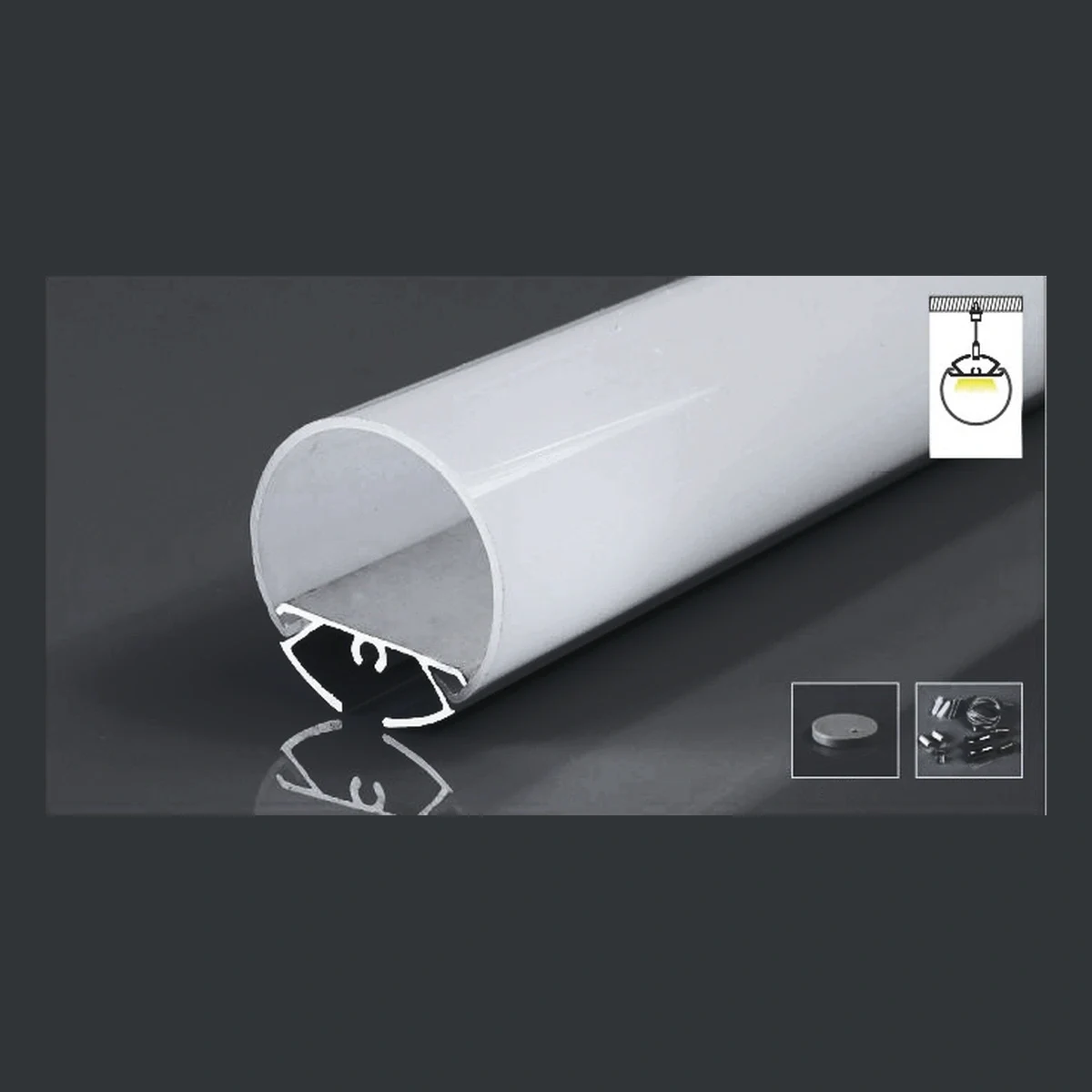
SDXT-290 · 0.7 mm wall
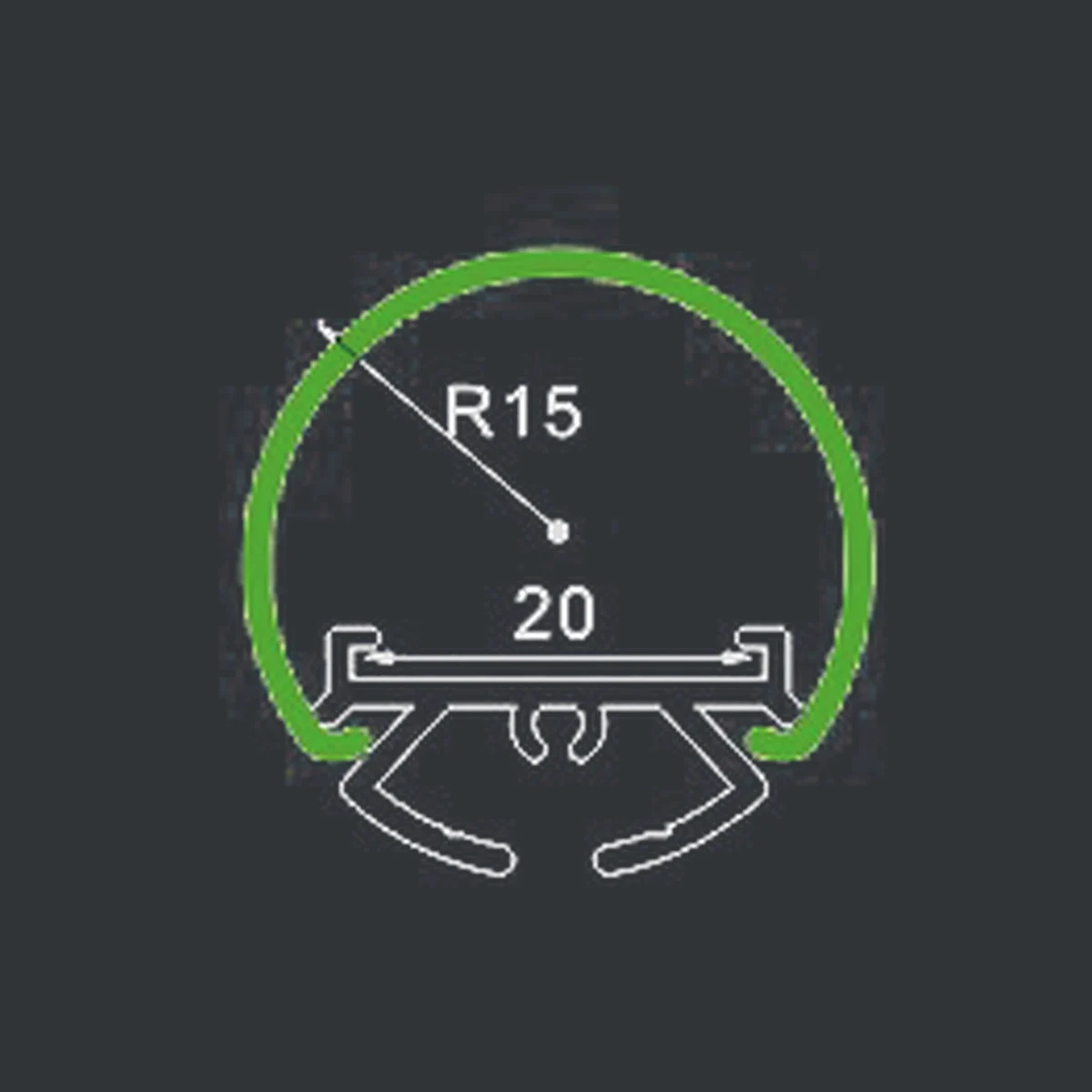
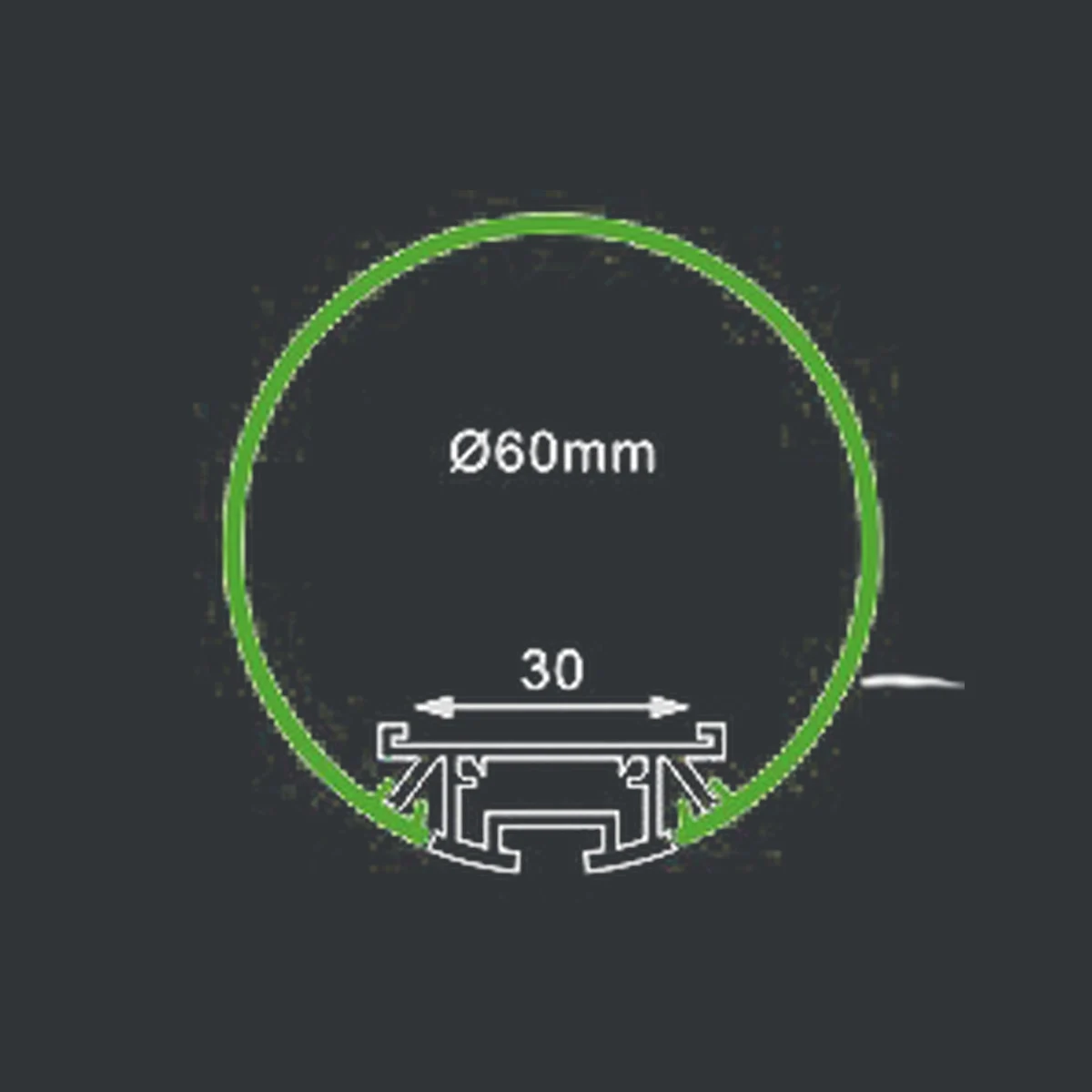
Start with the part number on the quotation and make sure it matches the drawing, sample label and proposed packing list. Check the external dimensions, usable internal width, nominal wall thickness, length, finish, cover material and mounting accessories. Record the drawing revision and identify any dimensions that still need sample confirmation. For a curved diffuser, check the fitted cover and the space available for the strip and its connector.
Read both sets of dimensions on the cross-section. Overall width and height tell you how much space the assembled channel needs. Internal width and height show the room inside it. Check the usable flat mounting width and the maximum recommended LED strip width separately, and verify connector clearance on the sample. The reference drawings above do not label every internal dimension. Request a fully dimensioned drawing if those clearances affect your installation.
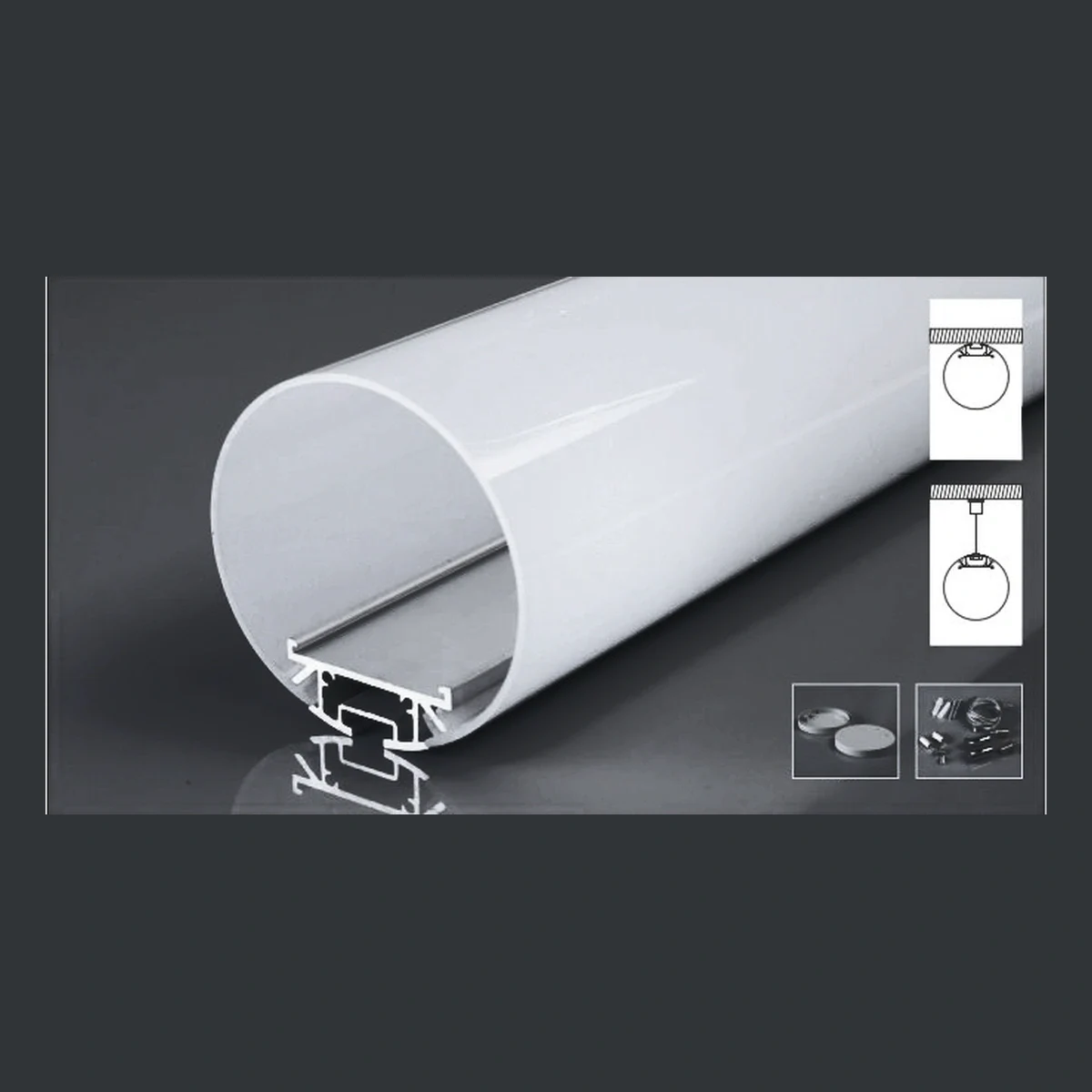
In Union Opto’s SDXT-230 and SDXT-290 specification examples, the aluminum bodies are listed separately from their PC diffusers. The sheets list 1, 2 and 3 m lengths and an anodized finish. The nominal wall thicknesses are 1.3 mm for SDXT-230 and 0.7 mm for SDXT-290. The drawings are reference drawings pending approval, and strip compatibility is checked against the sample and approved drawing. For help checking the strip and connector fit, see the LED channel size guide.
2. Specify what “PC version” means in the purchase order
PC stands for polycarbonate. A buyer asking for a PC version may mean a polycarbonate diffuser fitted to an aluminum profile, or a channel whose body is made of PC. These are different constructions. Confirm which part the buyer wants in PC and state the requested cover finish, such as clear or opal, separately from the material.
An order line might read “anodized aluminum alloy channel body, opal PC diffuser, end caps and mounting hardware.” Specify the materials of the end caps and mounting hardware when the buyer’s review requires them. For a change in cover material or finish, confirm fit and appearance on a sample and ask whether existing material declarations cover the replacement part. The diffuser cover guide explains the optical choices.
3. Match CE, RoHS and REACH documents to the supplied goods
CE and the EU Declaration of Conformity. First identify the supplied configuration. A passive profile with a cover and mounting accessories differs from a complete electrical luminaire with a light source and driver. Check the legislation that applies to the actual product as placed on the EU market. Where applicable legislation requires CE marking, the responsible manufacturer must assess conformity, prepare technical documentation and sign the EU Declaration of Conformity. The declaration should identify the product covered. European Commission CE marking guidance
RoHS material evidence. The RoHS Directive addresses restricted substances in electrical and electronic equipment. A luminaire manufacturer may request evidence for the profile, coating, diffuser or hardware as inputs to its own assessment. Ask which components and finishes must be covered. A supplier material statement should identify the supplied parts and the records behind the conclusions. A standalone EU DoC for a passive accessory should only be requested where the applicable product legislation calls for one. European Commission RoHS guidance
REACH information. Check applicable Annex XVII restrictions and the separate Candidate List communication duties. Under Article 33, where a Candidate List substance is present above 0.1% by weight in a constituent article, the supplier must communicate sufficient information for safe use, including at least the name of the substance. Ask the supplier to identify the Candidate List date and scope of the information provided. A declaration covering the bare aluminum should not be used to infer the status of the diffuser, coatings or end caps. REACH Regulation, Article 33 and Annex XVII
4. Ask for batch evidence when customs needs the aluminum percentage
- Model / Lot No.
- __________
- Sample material
- Aluminum extrusion substrate
- Test method
- __________
- Al (wt.%)
- __________
- Measurement uncertainty
- __________
A technical datasheet can state the specified alloy. A mill certificate or batch chemistry record can link measured composition to an extrusion lot or melt. An independent test report can document the results for a sample identified by model and batch. These documents answer different questions. For example, the alloy designation 6063 and the temper designation T5 describe the specified material and condition. The designations alone do not establish the aluminum percentage in the shipment.
For aluminum extrusions of Chinese origin, ask your customs broker to check whether an EU trade defence measure applies to the goods as declared. Send the origin, actual producer, cross-section, alloy evidence and the configuration shipped. Check the current measure and TARIC on the expected import date before using a duty rate in your landed-cost estimate. Original EU measure · EU TARIC consultation
Before commissioning a test, ask your broker whether it will accept the proposed laboratory, method and sampling plan for the intended declaration. Specify the aluminum substrate as the sample material and identify its model, lot or heat number, and sampling date. Ask the laboratory to report Al in mass percent, explain how the result was determined, and provide the precision, measurement uncertainty and any decision rule relevant to the threshold. A rounded value equal to a legal threshold, or a specification that lists aluminum only as “balance,” cannot establish that the result is strictly above that threshold. Keep the sample record and the traceable connection to the goods. Customs may examine goods and take samples when verifying the declaration. Union Customs Code, Article 188
5. Send one document request before confirming the order
Give your supplier the profile model, approved drawing revision, lengths, quantities, surface finish, diffuser material and accessories. State whether you are buying a passive channel set or a complete powered product. List the documents required by your compliance team and distinguish a general material statement from a lot-specific report. If the customs broker requires a particular sampling or reporting format, share that requirement before the production lot is selected.
Before shipment, match the model numbers, configurations and lot identifiers across the purchase order, packing list and supporting records. Check that any declaration is signed and covers the actual goods. Retain the sample approval and the drawing revision together so that receiving staff can compare the bulk order with the approved reference. The pre-shipment inspection checklist covers dimensions, finish, accessories and packing checks.
Request a datasheet and document review. Send Union Opto the model or cross-section, lengths, quantities, cover material, destination and the documents your broker or compliance team needs. Ask which records are available for the proposed configuration and which require batch confirmation or testing. Get a Free Sample & Quote