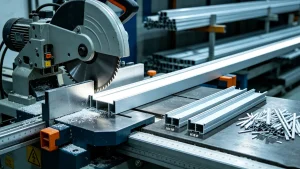
Custom LED Aluminum Profile
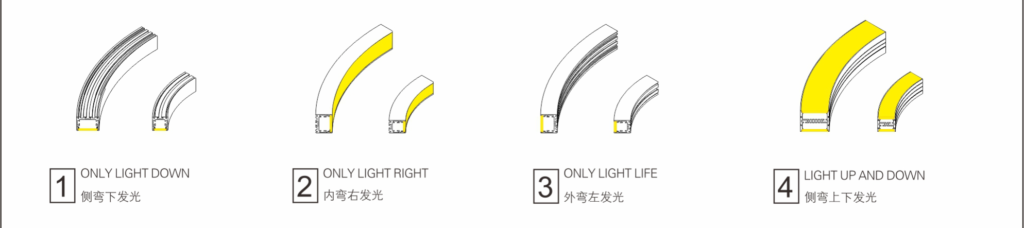
The category of customization parts
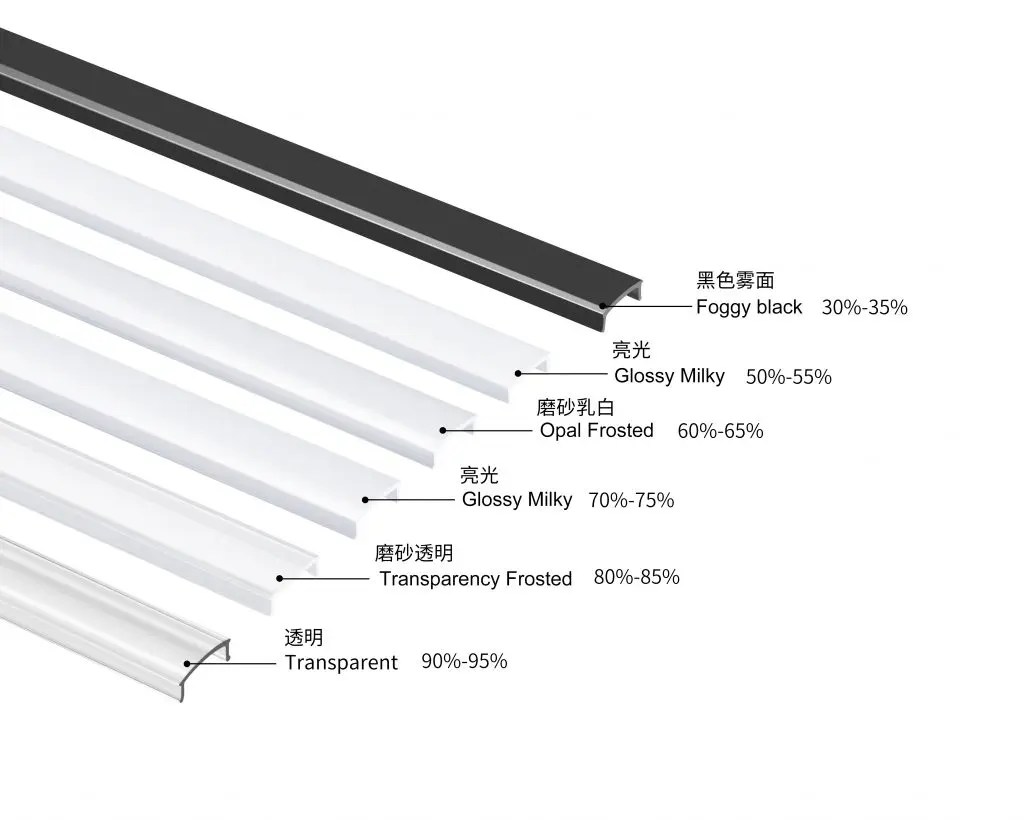
custom the color of PC Cover
1. Aluminum Raw Material Prices
- Global supply and demand
- China domestic aluminum prices
- International aluminum prices
- Energy and electricity costs
- Production capacity
- Transportation costs
- Exchange rates
- Market conditions
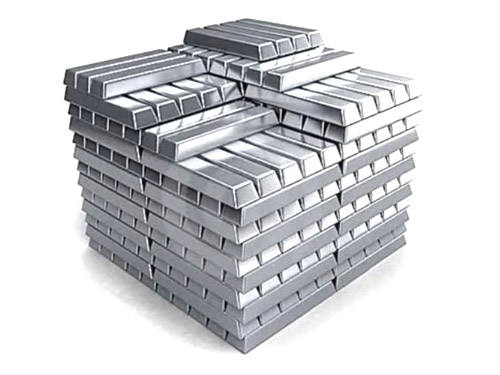
Aluminum is one of the most important raw materials used to manufacture LED aluminum profiles.
The basic manufacturing process starts with aluminum billets or other aluminum raw materials. The material is heated and pushed through an extrusion die to create the required LED aluminum profile shape.
Therefore, changes in the aluminum market can have a direct effect on the manufacturing cost.
Aluminum prices can change because of:
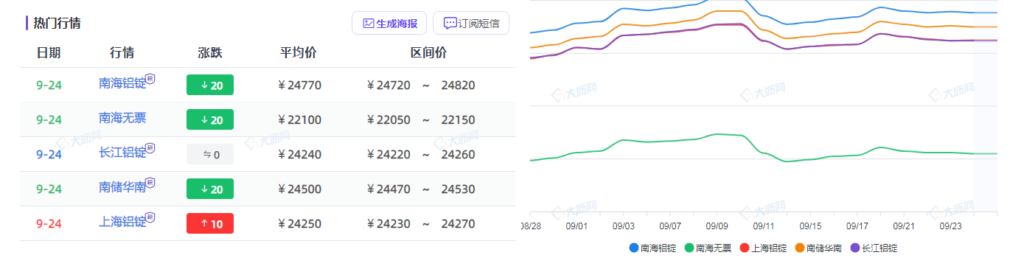
For a China-based LED aluminum profile manufacturer, domestic aluminum prices are an important reference when calculating production costs.
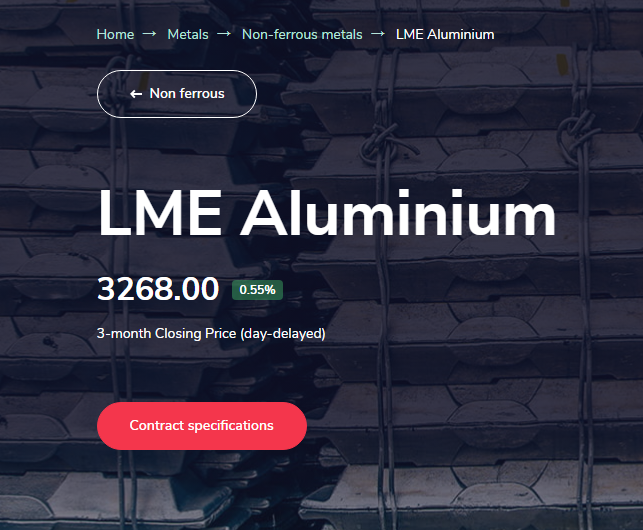
International buyers may also follow the London Metal Exchange (LME) aluminum price and other international market benchmarks.
Data is sourced from publicly available official page about material cost of aluminum ingot www.lvdingjia.com
Data is sourced from publicly available official page about material cost of aluminum ingot www.lme.com
Why does aluminum price matter to your quotation?
- The quotation date
- Quotation validity period
- Aluminum material specification
- Whether the price is based on current aluminum market conditions
- Whether the price may be adjusted if raw material prices change significantly
An LED aluminum profile is an extruded aluminum product. Therefore, when the cost of aluminum billets increases, the material cost of producing the profile may also increase.
For large orders, even a relatively small change in aluminum price can make a significant difference to the total purchasing cost.
For example, if a project requires thousands of meters of LED aluminum profiles, a small change in the material cost per meter can have a noticeable effect on the total order value.
For this reason, when requesting a quotation, buyers should confirm:
China and international aluminum prices
For international buyers, it can be useful to compare China domestic aluminum market prices with international aluminum benchmarks.
For example, manufacturers and buyers may refer to sources such as:
- Shanghai Metals Market (SMM)
- Yangtze River Nonferrous Metals Market
- Shanghai Futures Exchange (SHFE)
- London Metal Exchange (LME)
China Aluminum Price Trend and Its Impact on LED Aluminum Profile Manufacturing Costs
This real market data can make the page more useful to professional buyers than a general statement about aluminum prices.
2. LED Aluminum Profile Wall Thickness
The wall thickness of an LED aluminum profile is another important factor affecting both price and performance.
Common wall thicknesses for LED aluminum profiles may include:
- 0.5 mm
- 0.6 mm
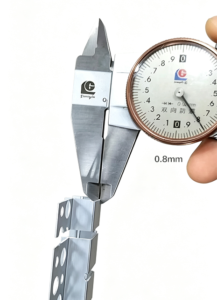
- 0.8 mm
- 1.0 mm
- 1.2 mm
The appropriate thickness depends on the profile design, dimensions, installation method, LED strip power, application, and required structural strength.
How does thickness affect the price?
In general, a thicker aluminum profile requires more aluminum material.
Therefore, when the profile design and dimensions are otherwise similar, increasing the wall thickness normally increases the material cost.
For example, a 0.5 mm profile may use less aluminum than a comparable 1.0 mm profile.
However, choosing the thinnest profile is not always the best way to reduce the total project cost.
0.5 mm LED aluminum profile
A 0.5 mm profile can be suitable for applications where lightweight construction and material cost are important considerations.
However, thinner profiles generally have less material and may have lower rigidity than thicker profiles.
For applications that require frequent handling, long unsupported spans, or greater structural strength, buyers should carefully evaluate the profile design before selecting a very thin wall thickness.
0.8 mm LED aluminum profile
Based on common market requirements, 0.8 mm can provide a practical balance between material cost, rigidity, and heat dissipation for many LED lighting applications.
It is important to evaluate the complete profile design rather than thickness alone.
1.0 mm LED aluminum profile
Thicker profiles generally provide greater structural strength and more aluminum mass for heat dissipation.
They may be more suitable for applications where the profile needs greater rigidity or where thermal performance is an important consideration.
However, thicker does not automatically mean that a profile is better for every application.
The correct wall thickness should be selected according to the actual project requirements.
Thickness comparison
| Wall Thickness | Material Cost | Rigidity | Typical Consideration |
|---|
| 0.5 mm | Lower | Lower | Cost-sensitive applications |
| 0.6 mm | Lower | Moderate | Lightweight applications |
| 0.8 mm | Moderate | Moderate | Balance of cost and performance |
| 1.0 mm | Higher | Higher | Applications requiring more rigidity |
| 1.2 mm | Higher | Higher | Heavy-duty or demanding applications |
For example:
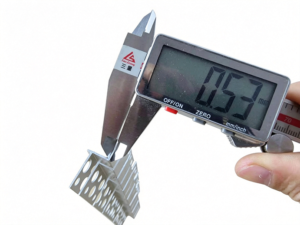
- 0.5 mm actual profile measurement
- 0.8 mm actual profile measurement
- 1.0 mm actual profile measurement
- 1.2 mm actual profile measurement
3. Factory Stock and Order Quantity
Factory inventory and order quantity can also affect the price of an LED aluminum profile.
When a manufacturer has sufficient raw materials, semi-finished profiles, or finished products in stock, the factory may be able to arrange production more efficiently.
This can help reduce purchasing and production risks.
Order quantity is also important.
A small order may involve relatively high costs for:
- Extrusion setup
- Die preparation
- Cutting
- Packaging
- Quality inspection
- Production changeover
- Material preparation
When the order quantity increases, some of these fixed costs can be distributed over a larger number of products.
As a result, the unit price can become more competitive.
Why large orders can receive better pricing
Suppose a buyer needs only a small quantity of a custom LED aluminum profile.
The factory may still need to:
- Prepare the extrusion die.
- Arrange raw materials.
- Set up the extrusion machine.
- Adjust the production parameters.
- Cut the profiles.
- Perform quality inspection.
- Prepare packaging.
Many of these activities require similar preparation regardless of whether the buyer orders a small quantity or a much larger quantity.
For larger orders, the preparation cost can therefore be spread across more meters of profile.
Factory inventory can also matter
If aluminum prices are increasing, a manufacturer with existing raw material inventory may have purchased some material before the price increase.
This may give the manufacturer more flexibility when preparing quotations.
However, inventory conditions vary between factories and between orders.
Therefore, buyers should always ask the supplier about current stock availability and production lead time rather than assuming that inventory is available.
4. Exchange Rate Fluctuations
For international buyers purchasing from China, exchange rates can also influence the effective purchasing cost.
Chinese manufacturers normally have production costs in RMB, while export quotations are often provided in USD or another international currency.
Therefore, changes in the USD/RMB exchange rate can affect the manufacturer’s actual revenue after currency conversion.
This is particularly important for:
- Large-volume orders
- Long-term supply agreements
- Repeat orders
- Annual purchasing contracts
- Projects with long quotation periods
For example, when the RMB appreciates against the US dollar, the same USD quotation may convert into fewer RMB for the Chinese manufacturer.
On the other hand, changes in the exchange rate can affect the buyer’s purchasing cost when the buyer’s own currency is different from USD.
Why does this matter for large orders?
For a small order, exchange-rate changes may have a relatively limited effect.
For a large project involving thousands of meters of LED aluminum profiles, however, even a small change in the effective exchange rate can influence the total purchasing cost.
For this reason, international buyers should consider both the unit price and the quotation validity period.
5. Factory Production Capacity and Order Volume
The factory’s current production schedule can also influence quotation conditions.
During periods of high demand, extrusion lines and other production equipment may be operating at high capacity.
When a factory has a full production schedule, its priority may be on existing orders, and production slots for new projects may become limited.
During periods when production capacity is more available, a manufacturer may have greater flexibility in scheduling new orders.
Production planning can affect:
- Production efficiency
- Machine utilization
- Delivery time
- Inventory turnover
- Production scheduling
- Order priority
When can buyers get better factory pricing?
There is no universal “cheap season” for every LED aluminum profile manufacturer.
Pricing depends on market conditions, aluminum costs, factory capacity, order quantity, product specifications, and other factors.
Instead of assuming that a particular month will always have a lower price, buyers should ask the manufacturer about:
- Current production capacity
- Available production slots
- Stock availability
- Lead time
- Current aluminum material cost
- Quantity discounts
For large projects, early communication with the factory can help the manufacturer plan production and materials more efficiently.
6. Packaging Requirements
Packaging is another cost factor that buyers should consider when purchasing LED aluminum profiles.
Packaging may appear to be a relatively small part of the total quotation, but customized packaging can add additional costs, particularly for large-volume orders or export shipments.
Standard packaging may include:
- Protective film
- Plastic bags
- Standard cartons
- Basic protective materials
Customized packaging may include:
- Custom cartons
- Printed logos
- Product descriptions
- Color printing
- Individual packaging
- Customized labels
- Wooden frames
- Pallets
- Wooden crates
How customized packaging affects cost
A buyer who requires individual packaging, customized printing, special labels, and additional protection will normally have higher packaging costs than a buyer who accepts standard factory packaging.
Long LED aluminum profiles also require careful packaging because they can be susceptible to scratches, bending, and damage during transportation if they are not properly protected.
For export shipments, packaging must also be considered together with:
- Container loading
- Palletization
- Loading efficiency
- Transportation distance
- Destination requirements
7. Surface Treatment, Custom Tooling and MOQ
Surface treatment and custom tooling can have a significant impact on the price of LED aluminum profiles.
Standard profiles are usually easier to manufacture because the factory can use existing extrusion dies and established finishing processes.
Customized products may require additional development and production work.
Surface treatment
Common finishes for LED aluminum profiles include:
- Silver anodized
- Black anodized
- White finish
- Other customized colors
A special color or surface finish may require additional processing.
The actual cost depends on the required finish, order quantity, production process, and supplier’s production arrangement.
Custom extrusion tooling
If a buyer needs a new LED aluminum profile design, a new extrusion die may be required.
The tooling cost can include:
- Die design
- Die manufacturing
- Die testing
- Trial extrusion
- Profile adjustment
For a small order, the tooling cost can represent a relatively large portion of the effective unit cost.
For a larger order, the tooling cost can be distributed across more meters of LED aluminum profile.
This is one reason why customized LED aluminum profile projects normally have an MOQ.
How to Get a More Accurate LED Aluminum Profile Quotation
If you want a factory to provide an accurate quotation, simply asking for the “price of LED aluminum profile” may not be enough.
A professional manufacturer will normally need several specifications.
Before requesting a quotation, prepare:

1. Profile dimensions
Provide the required width, height, and overall profile design.
2. Wall thickness
Specify whether you need approximately 0.5 mm, 0.6 mm, 0.8 mm, 1.0 mm, 1.2 mm, or another thickness.
3. Surface treatment
Provide the required width, height, and overall profile design. Specify silver, black, white, or another finish.
2. Wall thickness
Specify whether you need approximately 0.5 mm, 0.6 mm, 0.8 mm, 1.0 mm, 1.2 mm, or another thickness.
5. Length
Confirm the required standard length or customized cutting length.
6. Quantity
Specify the estimated order quantity in meters or pieces.
7. Packaging
Explain whether standard packaging or customized packaging is required.
8. Application
Tell the manufacturer where the profile will be used, such as:
6. Quantity
- Kitchen cabinets
- Wardrobes
- Display cabinets
- Furniture
- Supermarket shelves
- Commercial lighting
- Office lighting
- Ceiling lighting
- Wall lighting
- Stair lighting
The more complete the information, the easier it is for the factory to calculate the actual production cost and provide an accurate quotation.
MOQ for custom LED aluminum profiles
The MOQ for a custom profile can depend on:
- Profile design
- Aluminum alloy
- Extrusion die
- Surface treatment
- Color
- Cutting requirements
- Packaging
- Order quantity
Before placing a custom order, buyers should confirm the following with the manufacturer:
- MOQ
- Tooling cost
- Sample cost
- Tooling lead time
- Production lead time
- Surface treatment
- Packaging
- Quality requirements
- Delivery terms
Final Thoughts
The price of an LED aluminum profile is determined by multiple factors.
The seven major factors discussed in this guide are:
- Aluminum raw material prices
- Profile wall thickness
- Factory stock and order quantity
- Exchange rate fluctuations
- Factory production capacity
- Packaging requirements
- Surface treatment, custom tooling, and MOQ
For B2B buyers, the lowest quotation is not always the best choice.
When comparing LED aluminum profile manufacturers, you should also consider aluminum thickness, profile design, heat dissipation, dimensional accuracy, surface finish, packaging quality, production capability, lead time, and after-sales support.
A reliable manufacturer should be able to explain how the quotation is calculated and provide clear product specifications before you place a large order.
If you are looking for a customized LED aluminum profile, providing the profile drawing, dimensions, required finish, quantity, packaging requirements, and application will help the manufacturer prepare a more accurate quotation.
Looking for an LED Aluminum Profile Manufacturer in China?
Contact Union Opto with your profile drawing or project requirements. Our team can review your requirements and provide a factory quotation based on the required specifications, quantity, surface treatment, and packaging.